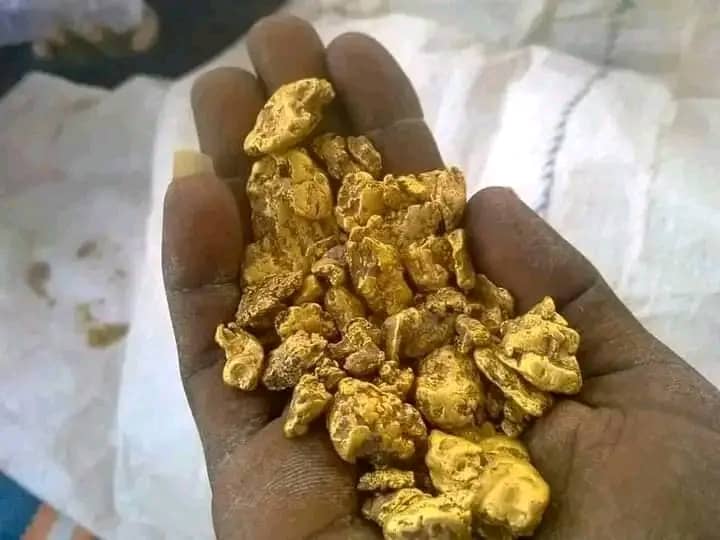
Artisanal and small-scale gold mining (ASGM) supports the livelihoods of very large numbers of people across Africa, Asia and Latin America. It is also, according to the United Nations Environment Programme, the largest source of human-made mercury emissions in the world. For anyone who wants to buy ethical gold, mercury use is one of the most important questions to understand.
This article explains why mercury is used, why it is so harmful, what the Minamata Convention on Mercury requires of governments, which mercury-free methods exist, and how buyers can bring these issues into their own due diligence.
Why Artisanal Miners Use Mercury
Mercury binds with fine gold particles to form an amalgam, a soft lump that is easy to separate from crushed ore or sediment. The miner then heats the amalgam to drive off the mercury as vapour, leaving behind sponge gold. The method is cheap, quick, works with simple equipment and can be done by one person, which explains its persistence in remote mining areas where capital and technical support are scarce. Many miners also sell their gold through local buyers who pay quickly in cash, which rewards fast processing over cleaner but slower methods.
The problem is that much of the mercury escapes into the air, soil and water, and the people closest to it are the miners, their families and neighbouring communities.
The Health and Environmental Harm
Mercury is a potent neurotoxin. The harm comes through two main routes.
- Mercury vapour: burning amalgam in the open releases vapour that is inhaled by the miner and anyone nearby. Exposure can damage the nervous system, kidneys and lungs, and the risk is greatest when amalgam is burned inside homes or near children.
- Methylmercury: mercury that reaches rivers and lakes can be converted by microorganisms into methylmercury, which accumulates in fish and moves up the food chain. Unborn and young children are particularly vulnerable to its effects on brain development.
- Long-lasting contamination: mercury in soil and sediment can persist for many years, affecting farming and fishing communities downstream of mining sites.
The Minamata Convention on Mercury
The Minamata Convention on Mercury is a global treaty, adopted in 2013 and in force since 2017, designed to protect human health and the environment from mercury. It is named after Minamata in Japan, where industrial mercury pollution caused severe poisoning in the twentieth century.
For gold mining, the key provision is Article 7 and its Annex C. Parties where artisanal gold mining with mercury is more than insignificant must notify the Convention and develop a national action plan to reduce, and where feasible eliminate, mercury use in the sector.
The worst practices targeted for elimination
National action plans must include steps to eliminate four practices the Convention identifies as especially harmful.
- Whole ore amalgamation, where mercury is mixed with all the ore rather than a small concentrate.
- Open burning of amalgam or processed amalgam.
- Burning of amalgam in residential areas.
- Cyanide leaching of sediment, ore or tailings to which mercury has been added, without first removing the mercury.
Mercury-Free Alternatives
Mercury-free gold processing is possible, and several methods are already used by artisanal and small-scale operations. None is a universal solution: each depends on the type of ore, the available equipment and the skills of the miners.
Gravity concentration
Gold is much denser than the surrounding rock, so sluices, shaking tables, centrifugal concentrators and careful panning can separate it by weight. Good gravity concentration can produce a rich concentrate that needs little or no further chemical treatment, especially for coarse alluvial gold such as nuggets and larger flakes.
The borax method
In the borax method, a gravity concentrate is mixed with borax, a flux that lowers the melting point of the minerals around the gold, and smelted directly. It needs only modest equipment and has been promoted as a practical replacement for amalgamation in some artisanal mining communities.
Cyanide in controlled plants
Cyanide leaching recovers fine gold efficiently and is standard in industrial mining. It is not risk-free: cyanide is highly toxic and must be handled, stored and neutralised under strict controls. It is a realistic alternative only in properly designed and managed processing plants, never in informal settings and never on tailings that still contain mercury.
Interim measures
Where mercury is still used, retorts that capture and recycle mercury vapour, and concentrating ore before amalgamation, can sharply reduce exposure. These are improvements rather than mercury-free solutions.
Why Buyers Should Ask About Mercury
Buyers sit at the end of the supply chain, but their questions travel back up it. Mercury use is rarely visible in the finished gold, so the only way to learn about it is to ask and to look for documentation that links gold to specific sources. When international buyers and refiners ask how gold was processed, suppliers and mining communities gain a reason to invest in cleaner methods. Asking also helps buyers manage their own reputational and compliance risk.
- How was this gold recovered and processed at the mine site?
- Was mercury used at any stage, and if so, how was it managed?
- Which mines or regions does the gold come from, and can you document that?
- What chain-of-custody records accompany the shipment?
- How do you assess the environmental and social practices of your suppliers?
How This Connects to OECD Due Diligence
The OECD Due Diligence Guidance for Responsible Supply Chains of Minerals from Conflict-Affected and High-Risk Areas is the most widely referenced international framework for responsible gold sourcing. It sets out a five-step process: establish strong management systems, identify and assess supply chain risks, design and implement a strategy to respond to them, carry out independent third-party audits at identified points in the chain, and report publicly on due diligence.
The guidance focuses on risks such as conflict financing, serious human rights abuses and financial crime, and it encourages engagement with legitimate artisanal miners rather than simply avoiding them. Many buyers and refiners also apply the same step-by-step approach to environmental issues like mercury. Strong chain-of-custody records are the starting point for either.
Responsible Sourcing in Practice
Ethical gold is ultimately about traceability: knowing where the gold came from, how it was produced and who handled it along the way. YNM Gold Sellers provides chain-of-custody documentation and an independent assay certificate with every purchase, and you can read more about our approach on the ethical gold sourcing page and our overview of artisanal gold mining in East Africa.
If you are comparing suppliers, our guide to buying physical gold safely covers the documents to request, and our compliance page sets out the credentials we provide to buyers.
Frequently Asked Questions
What is mercury-free gold?+
Mercury-free gold is gold that was recovered and processed without using mercury, for example through gravity concentration, the borax method or properly controlled industrial processing.
What does the Minamata Convention require for gold mining?+
Countries where artisanal gold mining with mercury is more than insignificant must develop a national action plan to reduce, and where feasible eliminate, mercury use, including steps to end practices such as whole ore amalgamation and open burning of amalgam.
Is cyanide a safe alternative to mercury?+
Cyanide is highly toxic and is only an acceptable alternative in properly designed and managed processing plants with strict controls. It should never be used in informal settings or on tailings that contain mercury.
How can I tell if gold was mined responsibly?+
Ask for chain-of-custody documentation showing the source and handling of the gold, ask how it was processed, and check whether the supplier follows a due diligence framework such as the OECD guidance.
More Gold Buyer Guides
- How to Buy Physical Gold in the USA: A Practical Guide to Bullion · Buyer Guide
- Buying Gold Bullion in the UK: VAT, Tax and What to Check · Buyer Guide
- Investing in Gold in Canada: Should You Buy Gold? · Market Analysis
This article is general information, not financial, tax or legal advice.